Draft any document in 60 seconds. Review thousands of pages instantly. Research case law in plain English. NexDraft is the complete AI legal workspace — built exclusively for US practice.
From drafting to research to diligence — NexDraft handles the entire legal workflow so your team can focus on strategy.
From complaint analysis to motion drafting — NexDraft reduces manual effort, prioritizes strategy, and drives stronger outcomes. Research evidence, analyze precedents, and draft motions in minutes.
Review thousands of contracts simultaneously. AI extracts key provisions, flags risks, and identifies missing clauses — built to cut diligence from days to hours.
Every alert traces to a primary government record — the Federal Register, SEC EDGAR, CourtListener. Nothing paraphrased from a newsletter. Nothing you can't cite.
Watch the topics your clients live on. New proposed rules surface with their comment deadline — the window where you can still shape the outcome — plus a one-click client-impact summary.
Every material contract a public company signs is filed as an exhibit. Search a clause — an indemnification cap, an MAE definition — and read how it was actually negotiated across thousands of real agreements.
Every citation in every draft is checked against the CourtListener database and badged — verified, ambiguous, or not found — before you rely on it. No hallucinated case ever reaches a filing.

Create full documents based on analysis, reviews or research done in NexDraft, with citations to the underlying data, preserving context and legal nuance across sections.
Editor supports real-time collaboration and AI-assisted refinement. Invite colleagues to collaborate, and ask NexDraft for improvements or clarifications, then accept or reject with full control.
The Unit Purchase Agreement involves Jamf Software, LLC (Purchaser) and Jamf Holding Corp. (Purchaser Parent) acquiring all Seller Units of Identity Automation Systems, LLC from the Sellers, with Spotlight Equity Partners, LLC serving as Sellers' Representative. The Base Purchase Price is $215,000,000, with an additional $40,000,000 Deferred Purchase Price due October 1, 2025.
The UPA's core risk allocation framework—non-survival of seller representations and warranties, R&W insurance as the purchaser's exclusive remedy, and fraud carve-out—aligns with current market practice.
Research, draft, review, and collaborate — the complete AI legal workspace.
Engineered for how attorneys actually think. No new workflows. No disruption. Just faster, better output.
NexDraft adapts to your specialty — from M&A to litigation, banking to insurance.
40+ document types across every area of US law. All jurisdiction-aware. All drafting-ready.
Early access — we publish attorney reviews only with written permission, and only real ones.
Solo $99 · Team $249/seat · Firm $499/seat · Enterprise custom. No hidden fees. Cancel anytime.
In Word. In the browser. On the go. The same powerful AI, wherever your work happens.
Try every feature free — one full run of each. Upgrade when it earns a place in your practice.

Transform the way you draft, redline, and review documents — bringing the full power of NexDraft AI directly into Microsoft Word.
Work faster and sharper with purpose-built tools for lawyers. From ideas to final sign-off, NexDraft ensures every document is accurate, consistent and under your control.
Playbooks are customizable rule sets designed to streamline document review — NDAs, service agreements, and more.
One-click actions that save hours every day.
Every legal AI tool eventually collides with the same fact: attorneys live in Microsoft Word, and a tool that demands a separate editor gets abandoned by Friday. The NexDraft Word Add-In puts drafting, review, and redlining inside the document you already have open. Select a clause and ask for alternatives in your firm’s language; run a review pass that flags risks in the margin with the reasoning attached; generate a first draft into a blank document from a term sheet — all without leaving Word, and with tracked changes preserved for the redline workflow opposing counsel expects.
The add-in draws on the same engine as the full workspace: your uploaded templates, your style profile, and citation verification against CourtListener for anything that cites authority. Nothing about your file management changes — documents stay wherever your firm stores them, and the add-in operates on the open document.
Yes — suggestions can be inserted as tracked changes, and review flags appear as comments anchored to the relevant text, so the output slots directly into the normal negotiation workflow.
Modern Microsoft 365 desktop and web versions that support Office add-ins. The add-in is in active development — join the early access list from this page and you’ll get it the day it ships.
Content you run an action on is processed securely to generate the result, encrypted in transit, and never used to train models — the same data handling as the main workspace, documented on the security page.
Install NexDraft in Word and experience AI-powered legal drafting without leaving your workflow.
Cite accurately using credible and comprehensive legal sources. NexDraft ensures your work is verifiable, reliable and built on trust — across all 50 US states and federal law.
Through leading content partnerships, NexDraft gives lawyers the depth and speed they need for high-stakes legal work.
Whenever you ask NexDraft a question, it draws on three powerful legal research sources to deliver comprehensive, reliable answers.
The generic-chatbot era taught the profession a hard lesson: fluent answers with fabricated citations are worse than no answer, and judges have sanctioned the attorneys who learned it late. NexDraft’s research is built the opposite way — ask in plain English, get an answer grounded in real authority, with every case citation verified against CourtListener’s database of US court opinions and every statutory reference linked to the canonical text. If a proposition can’t be tied to verifiable authority, it is flagged, not smoothed over.
Coverage spans all 50 states and the federal courts. Research output arrives memo-shaped — issue, authority, analysis — and flows directly into drafting, so the brief you write cites the cases you actually verified. Precedent search finds how courts have treated specific language and fact patterns; each result links to the opinion itself, because reading the case remains the job.
Research that stops at an answer is half a workflow. In NexDraft, verified research feeds forward: pull a holding into a brief and the citation travels with it, already checked; ask for contrary authority and the results are labeled as such rather than blended into support; build a research trail per matter so six months later you can see which authorities were considered and why. For recurring questions — the enforceability positions, the jurisdictional splits your practice hits repeatedly — saved research memos become firm knowledge instead of one associate’s memory.
This is also where speed compounds honestly: the first draft of a research memo in minutes means the attorney’s hours go to reading the three cases that actually decide the question — which is the part of research that was always the job.
A general chatbot answers from statistical memory and will invent authority under pressure. NexDraft retrieves from real legal sources and verifies citations before output — the difference between a confident guess and a checked answer.
No — verification confirms the case exists, the citation is accurate, and links you to the opinion. Whether it supports your position is legal judgment, and the tool is built to make exercising that judgment fast, not to replace it.
Case law against CourtListener — the free, comprehensive database of US opinions — and U.S. Code references against Cornell Law School’s Legal Information Institute. Both links appear in the output so you can read the primary source in one click.
Find verified answers faster — with citations, across all 50 states and federal law.
Download in Microsoft Word format. Edit in Word, Google Docs, or any editor. Or open in NexDraft and customize with AI.
Describe your matter in plain English. Our AI generates a complete, jurisdiction-specific draft — including statute citations checked against CourtListener's database of 9 million federal opinions.
[PARTY NAME] — find/replace, fill in, done.Practical drafting walkthroughs, statute explainers, and trial-tested strategies. Written for practitioners, not laypeople.
Built specifically for US law. Case citations verified against CourtListener. U.S. Code statutes linked to canonical sources. The safety rails experienced attorneys actually want.
Review documents faster and draft precise, detailed agreements and reports in less time. NexDraft is the AI due diligence tool that handles the volume — smart document analysis included — so you can focus on strategy.
Every M&A matter is a document problem wearing a deal costume. In diligence, hundreds of contracts arrive in a data room and someone has to find the change-of-control triggers, assignment restrictions, exclusivity terms, and non-standard indemnities before signing. NexDraft’s tabular review reads the entire set and returns a structured grid — one row per contract, one column per issue — with every flagged clause linked back to the exact language in the source document, so an associate verifies in seconds instead of re-reading in hours.
On the drafting side, the AI due diligence tool feeds directly into work product: material-issues memos assembled from the review grid, disclosure schedule inputs extracted from the underlying agreements, and first drafts of ancillaries — assignment agreements, officer certificates, resolutions — generated against your deal terms rather than a generic template. Smart document analysis keeps defined terms consistent across the document family, so “Company Intellectual Property” in the merger agreement stays “Company Intellectual Property” in every exhibit.
The economics of mid-market M&A punish document volume: fixed-fee and capped-fee engagements mean every hour spent re-reading is margin lost. Teams using structured AI review typically compress first-pass diligence from weeks to days and — more importantly — reduce the miss rate on buried provisions, because the review is exhaustive by construction rather than dependent on attention at hour eleven. The attorney’s judgment stays where it belongs: deciding what a flagged clause means for the deal, not hunting for it.
You can upload contract sets in bulk and run a single review playbook across all of them. Output is a sortable table — counterparty, clause type, risk flag, verbatim language, pin-cite — exportable for your diligence memo. Volume limits depend on plan tier.
Accurate enough to be the first pass, never the last. Every extraction links to the source text specifically so a human can verify instantly — that verification loop is the design principle. Treat the grid as a complete map of where to look, with final judgment remaining attorney work.
Standard PDFs and Word documents work directly. Low-quality scans are processed on a best-effort basis and flagged where text extraction is uncertain, so nothing silently disappears from the review.
Join attorneys at leading deal shops who use NexDraft to process more transactions with the same team.
Streamline litigation with an AI legal assistant built for trial teams. Full litigation support — your AI handles the document burden while you focus on winning outcomes.
Litigation runs on three document problems: understanding what happened (discovery and the record), proving it (briefs and motions), and preparing to test it (depositions and trial). NexDraft supports each. Chronology building converts thousands of pages of discovery into a dated, source-linked timeline — every event pin-cited to the underlying document, so the story of the case assembles itself from the record instead of from memory.
For written advocacy, drafting support produces first drafts of motions, briefs, and discovery responses in your structure and style, with every case citation verified against CourtListener before it reaches the page — the safeguard that matters in an era when courts sanction attorneys for AI-fabricated authority. Deposition preparation summarizes prior testimony, surfaces inconsistencies across witnesses, and generates examination outlines anchored to exhibit references.
The traditional answer to document volume is bodies — contract attorneys, review teams, write-offs. The structural problem is that reading speed doesn’t scale and attention degrades. AI litigation support inverts the ratio: the machine reads everything and organizes exhaustively; attorneys spend their hours on strategy, argument, and the judgment calls that actually win cases. Small firms feel this most — it is how a three-lawyer team credibly litigates against an opponent with thirty.
Beyond chronology and drafting, litigation teams use two further workflows. Discovery review at volume: tabular review sweeps a production for the categories that matter — admissions, key custodian communications, damages-relevant records — returning a structured, pin-cited grid rather than a pile of “hot doc” guesses, so privilege and responsiveness calls are made against organized evidence. Argument building: give the tool your theory and the record, and it assembles supporting facts with citations, surfaces the record evidence that cuts against you, and drafts the argument section scaffold — the honest version of AI advocacy, where the machine organizes and the lawyer persuades.
For trial, deposition designations, exhibit lists, and witness outlines are generated from the same source-linked record, which means everything handed to the court traces back to a page and line.
This is the failure mode NexDraft was specifically built to prevent: citations are checked against CourtListener’s database of real opinions, and anything unverifiable is flagged rather than passed through. You still read the authority — verification confirms existence and citation accuracy, not that the case supports your argument.
Yes — upload the production set and it extracts dated events into a timeline, each entry linked to its source page. You can filter by actor, issue, or date range and export for use in motion practice or trial prep.
No. Uploaded documents are used to perform the work you request, not to train models. See the security page for encryption and retention specifics.
NexDraft handles the document burden so your team focuses on what matters — strategy, arguments, and outcomes.
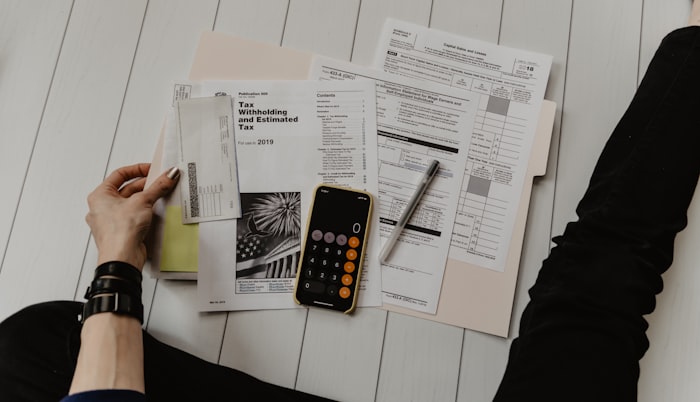
Analyze complex tax rulings and legislation with speed and clarity. Draft opinions, memos, and compliance documents in minutes.
Tax work is where citation precision matters most and tolerance for approximation is lowest. NexDraft’s research links every Internal Revenue Code reference to the canonical text at Cornell LII, so a memo citing § 368(a)(1)(F) links to the actual statute — not a paraphrase from the model’s memory. Case authority is verified against CourtListener, covering Tax Court and federal court opinions.
On the drafting side, tax attorneys use NexDraft for opinion letters, memoranda, ruling request drafts, and client alerts — documents where structure is conventional and the value is in analysis. The AI produces the scaffolding — facts, law, application, conclusion — in your house style, and keeps statutory and regulatory references consistent through revisions. Regulatory Watch tracks changes so your standard positions get flagged for review when the underlying law moves.
Tax practice splits into research-heavy advisory work and volume documentation, and AI serves them differently. On the advisory side: statutory analysis with linked authority, comparison of positions across years as the law changes, and first-draft memoranda that put verified citations in place before the attorney’s analysis begins. On the documentation side: consistent production of engagement letters, information request lists, ruling requests, and client alerts — each generated in firm style from matter facts, not retyped from the last matter’s file.
The compounding value is institutional: positions, memos, and standard language accumulate in the workspace, so the firm’s answer to a recurring question is retrieved and updated rather than re-researched from zero — with Regulatory Watch flagging when the underlying authority has moved and the stored answer needs review.
Code sections are linked to canonical sources; regulations and administrative guidance are supported in research with the same verify-before-cite approach. Where a source cannot be verified to an authoritative text, it is flagged rather than silently included.
It drafts the structure and first pass — facts, issues, applicable law with verified citations, and analysis scaffolding at the confidence standard you specify. The opinion itself, and the judgment behind “will” versus “should” versus “more likely than not,” remains yours.
Statutory links always point at the current canonical text, which is precisely why linking beats reciting: the source of truth is the source itself, not a model snapshot.
NexDraft searches IRS rulings, Treasury regulations, and state tax codes in seconds.
Stay ahead of regulation, process documents faster and focus on strategy. NexDraft's AI contract review software handles banking compliance at speed.
Banking practice is document-dense in a specific way: long, heavily negotiated instruments — credit agreements, security documents, intercreditor agreements, ISDA schedules — where risk lives in cross-references and defined terms. NexDraft’s review reads at that level: covenant packages extracted and compared against your standards, defaults and cure periods tabulated, assignment and transfer restrictions flagged with the exact operative language linked for verification.
For compliance workloads, teams use tabular review to sweep document portfolios when regulations change — finding every agreement affected by a new rule and producing a remediation list in one pass rather than one file at a time. Drafting support generates amendment drafts, consent letters, and compliance memoranda in your templates, keeping the defined-term hygiene that banking documents demand.
The step change for banking teams isn’t reviewing one credit agreement faster — it’s treating the whole portfolio as structured data. Once agreements are reviewed into the grid, questions that used to take a week of file-pulling become filters: which facilities permit assignment without consent, where are the sub-90-day cure periods, which intercreditor terms deviate from standard. When LIBOR-style transitions, sanctions updates, or new capital rules arrive, the affected-population question answers itself, and amendment drafting starts from a generated first pass keyed to each agreement’s actual language.
That portfolio view is also the compliance story regulators increasingly expect: a documented, repeatable review methodology with source-linked findings, rather than institutional memory about what the documents probably say.
Yes — reviews run against a playbook you control: your required clauses, prohibited terms, and preferred formulations. Deviations are flagged with the counterparty language quoted and linked, so credit and legal can act on a structured exception list.
Smart document analysis tracks defined terms within and across related documents, flagging where a term is used but undefined, defined but unused, or defined inconsistently between the credit agreement and its ancillaries — the classic sources of banking-document risk.
Documents are encrypted in transit and at rest and never used for model training. Security details and compliance posture are documented on the security page; enterprise agreements include a DPA.
From credit agreements to compliance memos, NexDraft handles the volume so your team focuses on judgment calls.
Give your attorneys an AI workspace for lawyers that fits their existing workflow. NexDraft integrates into how law firms actually work.
For law firms, AI has one economic test: does it convert written-off hours into billable capacity? Most of a firm’s write-offs hide in document work — the third hour of a first draft, the diligence re-read, the research detour — time that was real but not billable at full value. NexDraft attacks precisely that layer: first drafts in minutes in the firm’s own style, review that reads everything and pin-cites what matters, research that arrives pre-verified.
Adoption is where most legal AI dies, so NexDraft fits existing workflow instead of replacing it: attorneys keep working in Word through the add-in, templates carry the firm’s language, and the style engine learns from documents you’ve uploaded so output sounds like your firm — not like a chatbot. Partners see matter-level output; nobody relearns their job.
Legal tech fails in firms for predictable reasons: it demands workflow change, its benefits accrue to the firm while its friction lands on the individual attorney, and nobody has time for training. NexDraft’s rollout pattern is designed against each: attorneys keep drafting in Word; the first useful result arrives in the first session, not after configuration; and the style engine means output needs less editing over time, so the tool gets more valuable with use instead of more tolerated.
For managing partners, the measurement is straightforward — pick one recurring document type, time it before and after for two weeks, and multiply by the firm’s volume. Firms that adopt this way typically expand from drafting into review and research within the first month, because the same verification-first engine powers all three; the decision stops being “should we use AI” and becomes “which workflow next.”
Most start with one document type they draft constantly — engagement letters, NDAs, demand letters — prove the time saving on real matters for a week, then expand into review and research. The free tier exists so you can run that test without a procurement decision.
Yes — Team and Firm plans share template libraries, review playbooks, and style profiles across the practice, so the second-year associate drafts from the same standards as the partner who wrote them.
Bar guidance is consistent: AI use is permitted, competence in the technology is expected, and the lawyer remains responsible for the output. NexDraft’s verification-first design — every citation checked, every extraction pin-cited — exists to make that supervision practical rather than aspirational.
Stop writing off the hours your AI tools save. NexDraft pays for itself in weeks, not quarters.
Generative AI for legal teams: collaborative AI that lets in-house counsel handle contract volume and compliance without growing headcount.
In-house legal has a demand problem: the business generates contracts, questions, and compliance obligations faster than headcount grows, and every slow turnaround teaches the business to route around legal. NexDraft functions as collaborative AI for lawyers embedded in that flow — NDAs and routine commercial agreements drafted against your playbook in minutes, inbound paper reviewed with deviations flagged and quoted, so the queue moves at business speed without lowering the bar.
For the work that defines in-house value — advising — research with verified citations turns “let me get back to you” into same-meeting answers, and Regulatory Watch surfaces rule changes against your obligations register before the business reads about them elsewhere. Contract portfolios become queryable: when a regulation changes or a counterparty is acquired, tabular review sweeps the repository and returns every affected agreement with the relevant clause linked.
The in-house difference is that legal’s output is consumed by non-lawyers, at business tempo, under audit. NexDraft supports that reality: contract turnaround with deviation flags the business can read, plain-language summaries generated alongside the legal analysis, and a record of what was reviewed, against which playbook, on what date — the audit trail that protects legal when a decision is questioned two years later.
It also changes the team’s capacity math. Generative AI for legal teams doesn’t replace the judgment that justifies headcount — it removes the mechanical layer that was consuming it: the fifth NDA of the day, the clause hunt across the vendor contract stack, the research memo that starts from a blank page. A two-lawyer team operating this way covers demand that used to argue for four, and covers it with more consistency, because the playbook — not the workload — sets the standard.
Yes — fallback positions, prohibited terms, and approval thresholds become the review standard, applied identically on every contract. That consistency is exactly what outside spend rarely delivers.
By moving the middle tier of work in-house: routine drafting, first-pass review, and initial research get handled internally at machine speed, so external spend concentrates on the genuinely specialist and high-stakes matters where it belongs.
Templates can be exposed for controlled self-service — sales generates the standard NDA within guardrails legal defined, and anything off-template routes to the team. Legal sets the rails; the business moves faster inside them.
Lean in-house teams use NexDraft to handle 3x the volume without adding headcount. Free up your lawyers for strategic work.
Effective May 13, 2026 · Last updated May 13, 2026
NexDraft ("we," "us," or "our") is committed to protecting your privacy. This Privacy Policy explains how we collect, use, store, and protect information when you use our AI-powered legal drafting platform at nexdraft.co (the "Service").
Account information: When you sign up, we collect your name, email address, and (if you sign in via Google) your Google profile information.
Content you create: Legal documents you draft, contracts you upload, prompts you enter, and feedback you submit. This content is stored to provide the Service.
Style profile: If you opt-in to Template Learning, we extract stylistic patterns from contracts you upload (preferred terminology, clause ordering, formality level). We do NOT store the full text of your training contracts after extraction.
Usage data: Pages visited, features used, error logs, and approximate location (derived from IP). We use this to improve the product.
We use your information to:
We do NOT sell your data, ever. We do not use your legal documents to train AI models. We do not share your content with third parties except as described in Section 4.
NexDraft uses Anthropic's Claude AI models to generate drafts and analyses. When you submit a prompt, the content is transmitted to Anthropic's API through our secure backend (Cloudflare Workers). Per Anthropic's data policy, API content is not used to train their models.
Citation verification uses CourtListener (Free Law Project) and Cornell Legal Information Institute (LII) — both not-for-profit legal-data sources. We send citation strings to these services for lookup; no other contract content is transmitted.
We use the following service providers to operate NexDraft:
We retain your documents and account data until you delete them or your account. You can:
No lock-in. Your data is yours.
If you are in the EU, UK, or California, you have additional rights under GDPR or CCPA, including:
To exercise these rights, email support@nexdraft.co. We will respond within 30 days.
We use industry-standard security measures: HTTPS-only communications, encrypted authentication tokens (Firebase RS256 JWT), encrypted storage at rest (Google Cloud), and server-side API key management (no API keys ever leave our backend). However, no system is 100% secure — if you suspect unauthorized access, contact us immediately.
NexDraft is intended for licensed attorneys and legal professionals. We do not knowingly collect data from anyone under 18.
We may update this Privacy Policy as the Service evolves. Material changes will be announced via email and an in-app notice. The "Last updated" date at the top reflects the most recent revision.
Questions or concerns about this Privacy Policy? Email support@nexdraft.co.
Data controller: NexDraft (operating from the United States).
Last updated: July 14, 2026
If NexDraft isn't right for your practice, email support@nexdraft.co within 14 days of your first payment and we will refund it in full — no questions, no retention flow.
Subscription renewals are refundable if you contact us within 7 days of the renewal charge and have not made substantial use of the service in the new billing period. Otherwise, cancelling stops the next renewal and you keep access until the end of the period already paid.
Payments are processed by Paddle.com, our merchant of record. Refunds are issued to the original payment method and typically appear within 5–10 business days depending on your bank. You may also request a refund directly through Paddle's buyer support at paddle.com.
You can cancel at any time from your account or by emailing support. Cancellation takes effect at the end of the current billing period; your documents remain exportable at all times.
Questions? Email support@nexdraft.co.
Effective May 13, 2026 · Last updated May 13, 2026
NexDraft is provided for licensed attorneys, paralegals working under attorney supervision, law students for educational use, and in-house legal professionals. By using the Service, you represent that you fall into one of these categories or are otherwise authorized to use legal drafting tools in your jurisdiction.
NexDraft does not provide legal advice and does not create an attorney-client relationship. All output is AI-generated drafting assistance. You are solely responsible for:
AI may produce confident-sounding errors, hallucinated citations, or outdated legal references. Treat every output as a first draft, not a final filing.
NexDraft is built specifically for United States federal and state law. While we provide non-US drafting on a best-effort basis with appropriate warnings, the Service is not optimized for foreign jurisdictions. For non-US matters, retain locally licensed counsel.
You agree NOT to use NexDraft to:
You own everything you create. You retain all rights to documents you draft, contracts you upload, and prompts you submit. We claim no ownership of your content.
You grant us a limited, non-exclusive license to process your content solely to provide the Service (e.g., to send prompts to Anthropic's AI for generation). This license terminates when you delete the content or your account.
We strive for high availability but do not guarantee uninterrupted service. We may perform maintenance, update features, or change AI models without notice. For business-critical work, do not rely on real-time access — always export your data periodically.
NexDraft is currently in beta. Features may change, break, or be removed. We may impose usage limits. We appreciate your patience and feedback as we improve.
TO THE MAXIMUM EXTENT PERMITTED BY LAW, NEXDRAFT IS PROVIDED "AS IS" WITHOUT WARRANTY OF ANY KIND. WE ARE NOT LIABLE FOR:
Our total liability for any claim is limited to the amount you paid us in the 12 months preceding the claim, or $100, whichever is greater.
You may stop using NexDraft anytime and export your data via the Account sidebar. We may suspend or terminate accounts for violations of these Terms with reasonable notice (immediate notice for serious violations).
These Terms are governed by the laws of [STATE WHERE NEXDRAFT IS BASED — UPDATE THIS], United States, without regard to conflict-of-laws principles. Disputes will be resolved in the state or federal courts located in [SAME STATE].
We may update these Terms as the Service evolves. Material changes will be announced via email and in-app. Continued use after changes means you accept the new Terms.
Questions about these Terms? Email support@nexdraft.co.
By clicking "Sign Up" or using NexDraft, you acknowledge that you have read, understood, and agree to these Terms of Service and our Privacy Policy.
No "superduper negotiable" enterprise pitch. No hidden fees. Built for US attorneys at every firm size.
🇺🇸 BUILT FOR US LAW · ⚖️ Every citation verified · 🏛️ Statutes linked to Cornell LII
| Feature | NexDraft From $99/mo |
Harvey $1,200/seat |
CoCounsel $1,600/seat |
Spellbook $39+/seat |
|---|---|---|---|---|
| Case citation verification | ✓ | Limited | Westlaw only | ✗ |
| Statute linking (Cornell LII) | ✓ | ✗ | ✗ | ✗ |
| Template Learning (your style) | ✓ | ✗ | ✗ | Partial |
| Risk Analyzer with severity | ✓ | Partial | Partial | ✓ |
| Redline Compare | ✓ | ✓ | ✓ | ✓ |
| Data export (no lock-in) | ✓ | ? | Enterprise only | ? |
| Built specifically for US law | ✓ | Multi-jurisdiction | Multi-jurisdiction | Multi-jurisdiction |
| Transparent pricing | ✓ | "Negotiable" | "Negotiable" | ✓ |
Competitor pricing based on publicly reported customer experiences (Reddit, r/lawyertalk, Feb 2026). Specific features verified at vendor websites where available.
NexDraft is currently in invite-only beta. Join the waitlist for your tier and we'll reach out when paid plans launch (Q3 2026). Early waitlist members get a 30% discount for life.
Yes. All paid tiers come with a 14-day free trial — no credit card required to start. Cancel anytime during the trial and you won't be charged.
Yes. Upgrade or downgrade anytime. Upgrades are prorated; downgrades take effect at the next billing cycle. Your data carries over seamlessly.
Your account doesn't lock. You can either upgrade to Team (unlimited) or purchase one-time draft packs ($30 for 25 additional drafts). No surprise overage fees.
Yes. Annual billing saves 20% across all tiers. Most firms choose annual after their first quarter.
Because we don't sell through enterprise sales teams that mark up the price 10×. We're a focused tool for US transactional and small-firm practice — not a horizontal platform trying to do everything. That focus is our advantage and lets us pass savings to you.
Yes. All data is encrypted in transit (HTTPS) and at rest (Google Cloud). We never train AI models on your content. Read our Privacy Policy for full details.
Yes. Monthly plans cancel at the end of the current billing cycle. Annual plans can be cancelled with a prorated refund. Export all your data anytime — no lock-in.
First 100 waitlist members get 30% off for life. We'll only contact you when paid plans launch.
Most AI legal tools are general-purpose chatbots dressed up for law firms. They make up case law. They hallucinate statutes. They quietly switch between models. They charge enterprise prices for what is essentially a ChatGPT wrapper.
We built NexDraft because attorneys deserve better.
Every case citation our AI produces is verified against CourtListener — the free, comprehensive database of US court opinions. Every U.S. Code reference is linked to Cornell Legal Information Institute. When we say a citation is verified, we mean a third party confirmed it exists.
Every draft is built on your own writing style, learned from contracts you've uploaded. Your "Confidential Information" stays "Confidential Information" — not "Proprietary Material" because the AI felt like switching.
Solo attorneys. Small firms (1–25 lawyers). In-house counsel at growing companies. Anyone who drafts NDAs, employment contracts, demand letters, settlement agreements, or basic corporate documents — and wants AI that respects their judgment instead of replacing it.
If you're a BigLaw partner looking for an enterprise platform — we're probably not for you. Yet.
General: hello@nexdraft.co
Support & feedback: support@nexdraft.co
Or use the 💬 Feedback button inside the app — it goes straight to me.
Delaware · Mutual · Effective April 22, 2026
This Mutual Non-Disclosure Agreement (the "Agreement") is entered into as of April 22, 2026, by and between Acme Corp, Inc., a Delaware corporation (the "Company"), and Beta Technologies LLC, a Delaware limited liability company (the "Recipient").
1. PURPOSE. The Parties wish to explore a potential software development partnership (the "Purpose"). In connection with this Purpose, each Party may disclose confidential and proprietary information to the other Party.
2. CONFIDENTIAL INFORMATION. "Confidential Information" means any data or information that is proprietary to the disclosing Party and not generally known to the public, whether in tangible or intangible form, including without limitation: technical data, trade secrets, research, product plans, products, services, customer lists, markets, financial information, and other business information.
3. OBLIGATIONS. Each Party agrees to: (a) hold the other Party's Confidential Information in strict confidence; (b) not disclose it to third parties without prior written consent; (c) use it solely for the Purpose; and (d) protect it with at least the same care used for its own confidential information.
4. TERM. This Agreement remains in effect for three (3) years from the Effective Date. Confidentiality obligations survive termination for five (5) years.
5. GOVERNING LAW. State of Delaware, without regard to conflict of law provisions.
| ACME CORP, INC. By: _______________ Name: _____________ Title: ______________ Date: ______________ | BETA TECHNOLOGIES LLC By: _______________ Name: _____________ Title: ______________ Date: ______________ |